



Unless you count the Bible, there are no recorded instances of someone being swallowed by a whale, let alone surviving. A small handful of folks have been trapped in the jaws of a humpback; one of them has even seen Whalefall (“I could totally relate”). The film, based on the novel by co-screenwriter Daniel Kraus, weaves an imaginative tale of what such an encounter might look like—and more importantly, feel like—from the perspective of a young diver, Jay Gardiner (Austin Abrams), searching for his father’s remains at sea, and with them, some emotional exorcism.
Unlike the Biblical Jonah, who survived for 3 days and nights, Jay has about an hour of oxygen left in his tank. At first, the movie’s constant switching between this central action and sentimental flashbacks proves disruptive; you might want to shake writer-director Brian Duffield by the shoulders and tell him to cut to the chase. However, it isn’t long before the seemingly disparate thrills and the melodramatic backdrop start to mix and merge, like mush churning in the belly of a—well, you know.
Stay in touch
Sign up for our free newsletter
The story begins with a scene of Jay’s ailing father, Mitt (Josh Brolin), taking his own life by going overboard while tied down with weights. The troubled Jay has mixed feelings about the man, and doesn’t participate in his mother and sister’s jovial stories about him. In fact, he snaps at them whenever the threat of being emotionally exposed rears its head. If he’s going to find closure, it isn’t in an empty casket, but by his father’s watery grave; the duo spent time together diving and discussing the sea, until Jay finally moved away.
Bit by bit, Duffield twists the screws of the premise in aquatic Rube Goldberg fashion, as a giant squid grabs a hold of Jay before being in turn swallowed by an enormous sperm whale with the diver still clutched in its tentacles. That the squid doesn’t immediately perish leaves Jay with an adversary to fight within the whale as well, a skirmish made visible by the presence of a bioluminescent jellyfish inside.
There’s little way to tell what’s up or down, left or right, or backward and forward in Jay’s little air pocket, so it takes a moment or two to clarify his immediate objectives. However, this ceases to matter once the physical and emotional stakes are finally laid bare. Being sucked further into the sperm whale’s guts—built as a squelching “room” of a different shade—yields harmful digestive acid, while ploughing forward also means wading through other, equally impossible biological blockades. All the while, Jay goes in and out of consciousness, allowing the film to fill in the blanks with increasingly charged memories of his time with his father and their uncomfortable, imperfect relationship.
The more we see them interact in the past, the more convincing this narrative structure becomes, lending credence to the up-close-and-personal filming within the whale’s unnerving confines. It’s a gross movie, to be sure—that it’s a wide studio release feels miraculous, as though Duffield has brought midnight madness into the daylight of a strip mall multiplex—buts its most visceral discomforts are in service of establishing its emotional contours, and cementing just how arduous Jay’s journey is going to be.
Despite the film being a body horror mise-en-abyme—Jay suffers wince-inducing physical harm, but he causes it too; his environment is a living thing after all—it takes bold swings at obvious emotional metaphors and knocks them out of the park. Duffield’s imagination and Jay’s become practically one and the same, as the director finds eye-catching ways to depict the plight of the whale, a creature equally at the mercy of nature, and one who gradually becomes a symbol for Mitt’s emotional vise-grip on Jay from beyond the grave.
The whale is also, quite audaciously, not the only creature that ends up standing in for these emotional dynamics. You’d think Jaws would be the obvious Spielberg comparison, but it’s really ET, a film in which a kid bids tearful goodbye to a goofy alien as a way to channel his paternal abandonment. Abrams is hardly a child, but he taps into a naked vulnerability without which Whalefall couldn’t possibly tick.
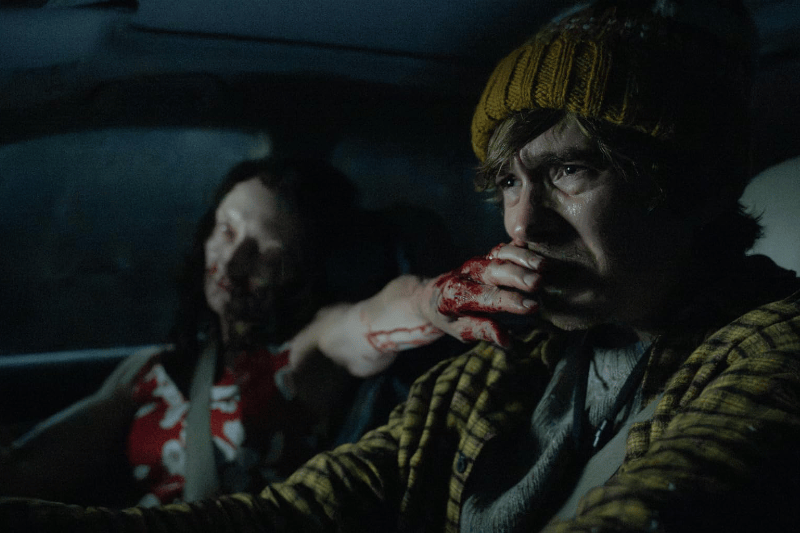
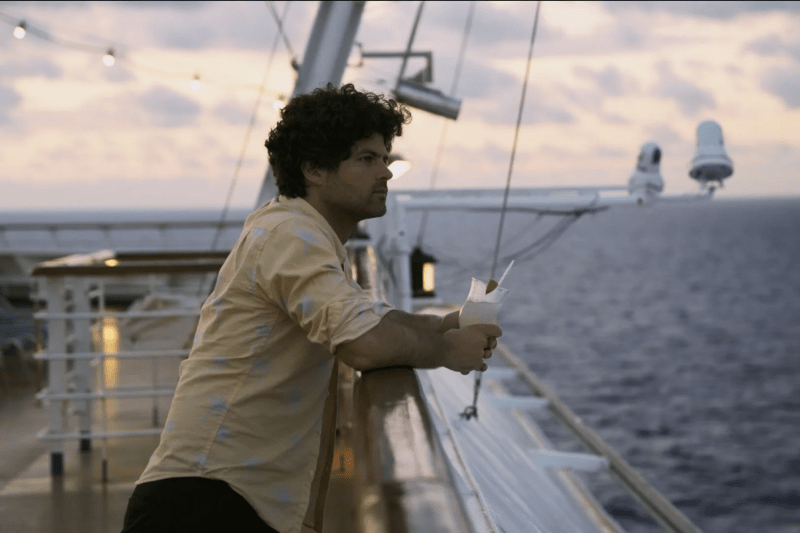
The actor has, in recent years, gone from the world’s sleaziest boyfriend on This is Us to a sympathetic horror underdog in films like Weapons and Resident Evil. With Whalefall, he grabs that baton even tighter, but ekes out a unique space as someone unafraid to look silly while being emotionally showy. His performance here doesn’t have an ounce of what you might describe as traditional leading man material—he screams and wails, and with his scuba mouth gear, he even sounds like a donkey at one point—but this lack of traditional cinematic masculinity dovetails perfectly into the movie’s themes. Mitt is a man's man, a gruff father trying to prepare his son for the world through tough love, even if it damages him. The story is about escaping this shadow while making it back to the surface.
Ultimately, the act of Jay prying open his emotions to find both connections to his father and a blueprint to escape through his many teachings is what fuels the movie’s raucous, moving final act. The result is a heart-rending, nerve-shredding work of ingeniously playful craftsmanship, where the stage is a living thing that gradually adopts an allegorical presence, ensuring that the act of survival isn’t merely one of logistics, but of deep catharsis. That it works at all is a miracle. That it works this well ought to be seen as a fist-pumping triumph. [4/5]