


Given the critical and commercial success of both Barbarian and Weapons, it was hard not to feel optimistic about Zach Cregger’s first foray into high-profile adaptation. Like many millennials, I grew up on the Resident Evil games, immersing myself in the world of Raccoon City long before I developed a taste for horror cinema. I trusted Cregger to approach the material with his patented blend of horror and absurdity, and after catching the film on opening weekend, I can safely say that he did not disappoint.
But the longer I sit with Cregger’s Resident Evil, the more his choices nag at me. Cregger’s film offers a refreshing spin on the video game adaptation, stripping away most of the franchise fat and returning to the filmic building blocks that made us fall in love with these games in the first place. In doing so, though, Cregger accidentally undercuts his own success by filtering his story through another medium: that of the video game live stream.
Stay in touch
Sign up for our free newsletter
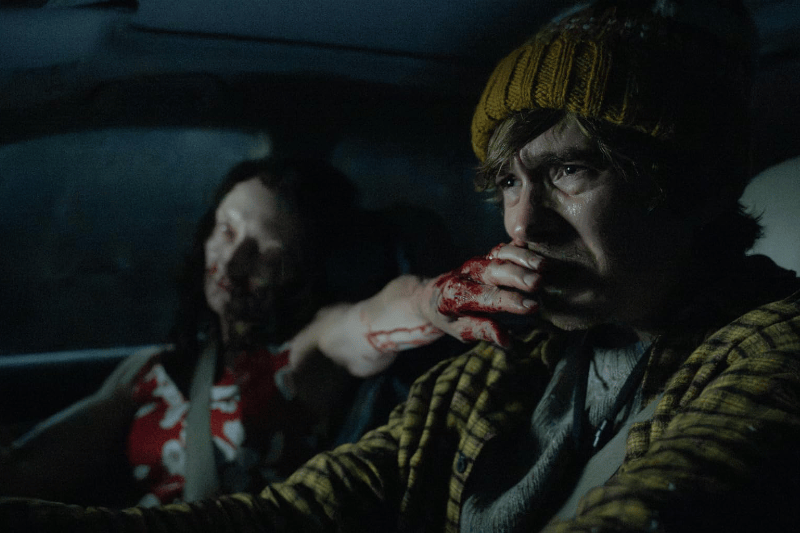
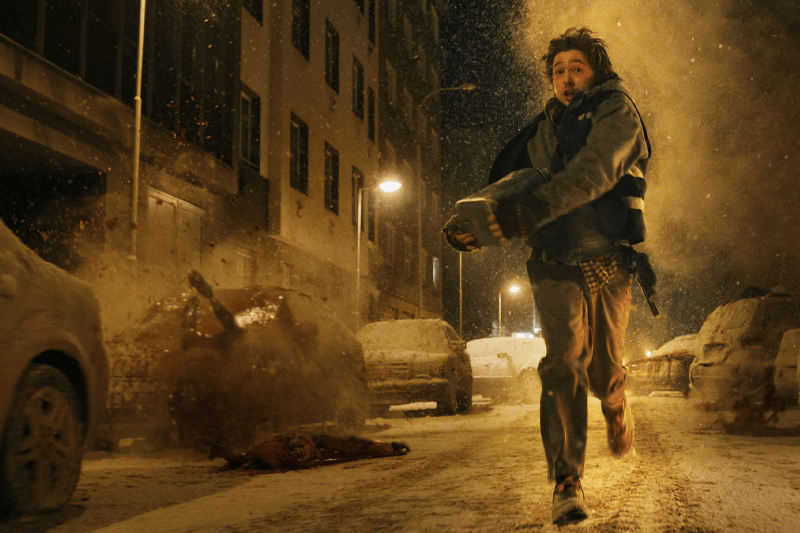
Many folks have commented on Cregger’s approach to adaptation with Resident Evil, and rightfully so. Unlike the Paul W.S. Anderson movies, Cregger keeps his camera at ground level, avoiding the Umbrella Corporation lore associated with the games and recreating the survival horror experience that caused so many to fall in love with Resident Evil in the first place. Bryan’s (Austin Abrams) journey through Raccoon City is an exercise in scarcity – never enough bullets, never enough bandages – and the lethality of Cregger’s world is a welcome change of pace.
This is never better than in the opening scene, where Bryan’s introduction to the infected is more flight than fight. Most video games are designed to scale your abilities up slowly; you start the game by fighting for your life against a single zombie, and end it with a small arsenal of automatic weapons in your inventory. Like in a game, Cregger’s opening sequence shows you the rules of his world and establishes Bryan’s true everyman status. It's one of a dozen instances where Cregger and cowriter Shay Hatten demonstrate a thoughtful approach the very structure of video games themselves.
Cregger and Hatten also draw inspiration from the NPC experience in the game. Anyone who has ever played a series like Resident Evil or Dead Space knows that these games are littered with letters and voice memos from nonplayer characters who do not survive the initial outbreak; content creators have built entire audiences on their satirization of these messages. Knowing Bryan’s fate does not make us appreciate the journey any less. If anything, it adds pathos to the film, reminding us that his tragedy is one shared by tens or even hundreds of thousands of characters across the city in any survival horror story.
But this faithful approach to adaptation can cut both ways. There are times where Cregger’s adaptation feels less like a narrative feature and more like the experience of watching Cregger live stream his own playthrough of a Resident Evil game. More than once, I found myself comparing the movie to a Twitch stream, where Cregger’s player-character talks directly to his audience between cut scenes. Abrams flashes a great knack for timing as our collective avatar, but his throwaway comments feel more like a fourth wall break than an authentic story beat.
Consider the scene that takes place in the RV. Cregger pulls off a neat trick with video game level design, incorporating the environmental barriers often found in survival horror into the structure of his production design. Bryan can’t go around the RV; he must go through it, and that forces him to encounter the infected child (putting him on his own path to goopy mutation). It’s a tense scene, and it offers our best look yet at the kind of person Bryan aspires to be while under pressure. But the moment he steps out of the RV, his dialogue with the audience continues.
“I’m not a bad person. I didn’t just kill a little girl.” These lines get a laugh, but they once again evoke the feeling of Cregger speaking into his headset after a particularly strong sequence of gameplay. In this moment, Bryan is no longer our collective avatar. He speaks just for Cregger, and our attention is diverted, again and again, away from the material itself in favor of the film's running commentary.
Is this approach a bad thing? Probably not. For too long, video game adaptations attempted to be all things to all people, recreating the experience of playing a game without recognizing that everyone’s personal playthrough is different. Cregger choosing to recreate the video game experience through a singular lens – his own – is certainly a more focused approach to the material, and it allows the movie to engage with audiences without pretending to let them drive. If the choice is adapting the game versus adapting the experience of playing the game, Cregger proves why world-building can and should take a back seat to horror.
But it does cause Resident Evil to be uneven throughout, never muting Cregger’s microphone – metaphorically speaking – and letting the character of Bryan speak for himself. Resident Evil is, without question, one of the best adaptations of the medium since video games became a thing. But once you start viewing it as a Twitch stream with a Hollywood budget, it’s hard to set that perspective aside. It doesn’t make Resident Evil a bad movie, but it might just prevent the film from being great.