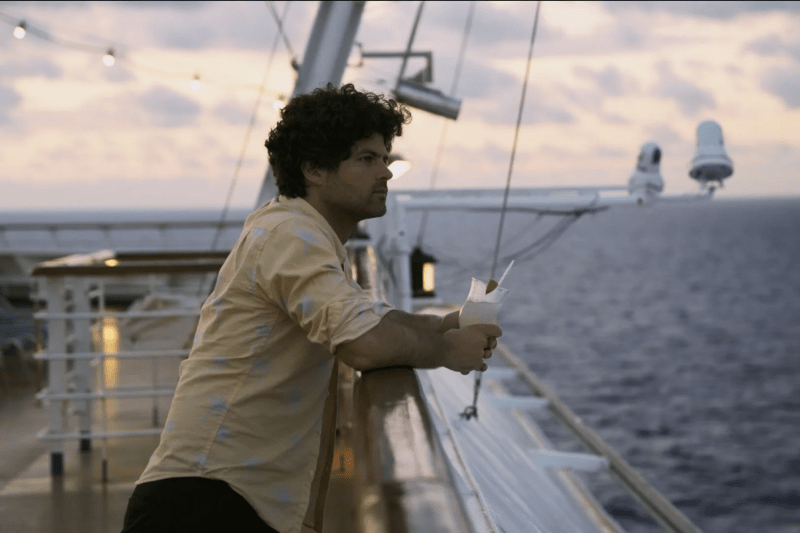


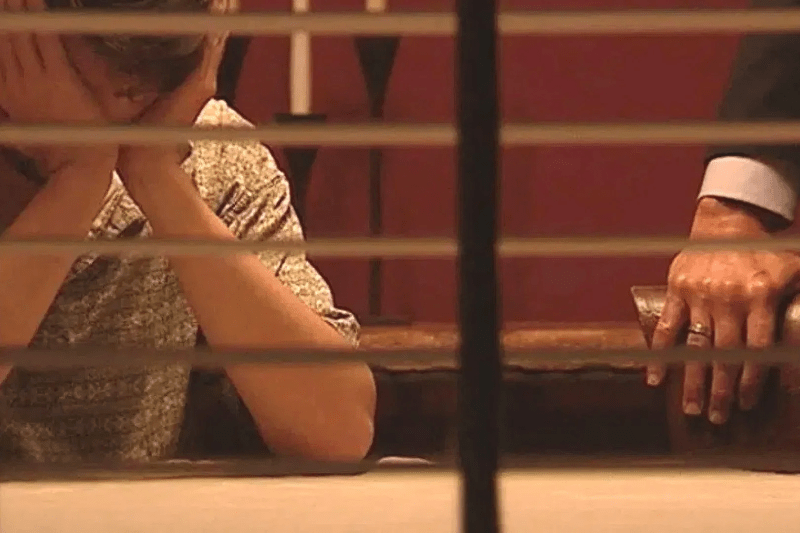

When documentary filmmaker David Osit came across raw footage of a sting from the iconic true crime show To Catch a Predator on a subreddit, something switched. No longer this was the “good guys vs bad guy” show that he grew up watching. Simple and neat. The multicam images managed to capture something much more complex, much more uncomfortable than any of the original episodes could have: humanity.
The 2025 documentary Predators, directed by Osit, initially presents itself as an exploration of the legacy that true crime shows like To Catch a Predator have left to our media landscape. The dubious partnerships with police and politicians, the spectacularization of trauma, the many copycats — including the documentary itself — and the catchy one liners.
But then, something switches again. The camera moves from the legacy and turns to the people.
First we have the decoys: Dani Jayden, Casey Mauro, and Dan Schrack. Their initial interviews present how exciting it all was in the beginning. They were young actors and models, looking for work and being pitched the idea that their roles in the show were helping change the world for the better.
Who wouldn’t want that at the age of eighteen?
Then we have Chris Hansen and his team of producers, police officers, and prosecutors. The do gooders, the heroes that decided to do something about such a pressing issue such as child sexual exploitation.
And finally, we have the predators. They were evil monsters – and that was pretty much the extent of it. Only, when Osit points his cameras toward these people for too long, cracks start to show.
Perhaps it wasn’t that the decoys were changing the world, but that they were barely adults, some still sexually inexperienced, being exposed to explicit conversations, images, and extremely dangerous situations every time they were placed at a sting. Like fresh meat in a trap created specifically for people planning to commit pedophilia.
Maybe Hasen and his team were not so heroic, utilizing their access to influential communication channels, to gather power, influence and capital.
And then there were the predators, whose mask of monstrosity suddenly drops and their ugly humanity shows. No longer the perfect villains, but only the imperfect and sick humans they are.
And when I say sick, I mean literally. Listed on the DSM, minor attracted people — as the medical community refers to them — usually realize they have these preferences very early in their lives, around thirteen years old. Most understand these feelings are not moral and manage to go about their lives without acting on it. But sometimes, they do and often great shame comes along with it.
This is the part of the documentary that people have a really difficult time with.
How dare the director empathize with these people? How dare he show their humanity in the face of justice fighters like Chris Hansen? This can only mean he likes and agrees with their actions, right?
Well… as someone who spends a lot of her time watching horror movies, I am often asked to place myself in the shoes of the villains. Some people would argue it is because these directors are sadists and enjoy watching people suffer — and it might be true in some instances — but often, it is the opposite. Horror movies ask you to put yourself in the shoes of these villains so that you can witness for yourself the tragedy of when someone loses their humanity, and how that might entice someone into replicating that loss on others.
And as someone who was a young girl at some point, who had to deal with almost daily instances of older men — and I mean men who could have been my grandfather — harassing me, and who only noticed it stopping when I turned twenty three and all my childlike traces disappeared, I understand the anger.
I understand the urge to lash out and resort to revenge when we witness someone caving in to their most disgusting impulses. But what Osit’s camera is able to present to us is that, despite how cathartic revenge feels in the moment, its lasting impacts are far from it.
The first instance in which we are faced with those consequences – of acting as judge, jury and executor – is when one of the stings assembled by To Catch a Predator changes format. The person they are trying to catch is very powerful and is only comfortable to meet the decoy in their own property. The show agrees. The decoy, Dan Schrack, walks into the house alone, and when the police finally present themselves, the man takes a gun and shoots himself in the head.
Later, when the film turns its attention to a group who tries to recreate the show’s format but on YouTube and with no assistance from the police force, we find ourselves in a similar situation. When the pedophile they were attempting to catch suddenly becomes suicidal and the police cannot come for the next hour due to a shortage, we are all trapped in this moment of pure disgust and fear. But also, pity.
Not because the filmmaker, the YouTube team, us, or even the predator think that their actions should go unpunished. Rather, because of the overwhelming realization that these people, who scare and hurt us, are just as small and pathetic as any other human.
But why, you might ask, should I think about the humanity of people like those predators, who were in fact planning on doing something they understood to be wrong? And the answer is that you don’t. Especially in a world of Epstein files and a rampant increase in cases of gendered violence, empathy is a resource that can become scarce. Giving it away without reflection might become dangerous for your health.
However, just like any good horror movie, the documentary never leads us to believe forgiveness is the “correct” answer. Rather, it asks us the question of where the monstrosity truly resides: in a single individual, or in a collapsed system that not only permits but rewards our most selfish and destructive impulses. Should our empathy be directed toward a person that might or might not be able to rehabilitate? Or a structure that profits off of their recurring bad behavior?
There’s no simple answer to these questions. But if there’s something that horror movies have taught me, it’s that the way to deal with the monsters is never to blindly attack or to lead with pure anger, but rather with empathy. And not because you forgive their crimes. But rather, because when we forgo empathy, we run the risk of treading the same path toward darkness. The path that no longer believes in humanity or that change is possible. A path that believes the world will always stay the same.
And I don’t want to believe in that.