


Danny Boyle’s 28 Years Later re-visited rage zombies in a modern wasteland, and followed a young boy’s coming of age as he accepted his mother’s passing. It also ended on a bizarre cliffhanger, allowing Nia DaCosta’s sequel — which picks up moments later — some defiantly strange turns. Split between a tale of violent indoctrination, and a gentle sci-fi story about the zombies’ origins, 28 Years Later: The Bone Temple bides its time (for better or worse) before having its subplots finally collide in raucous fashion, yielding some of the most rousing moments you’re likely to see in a cinema this year.
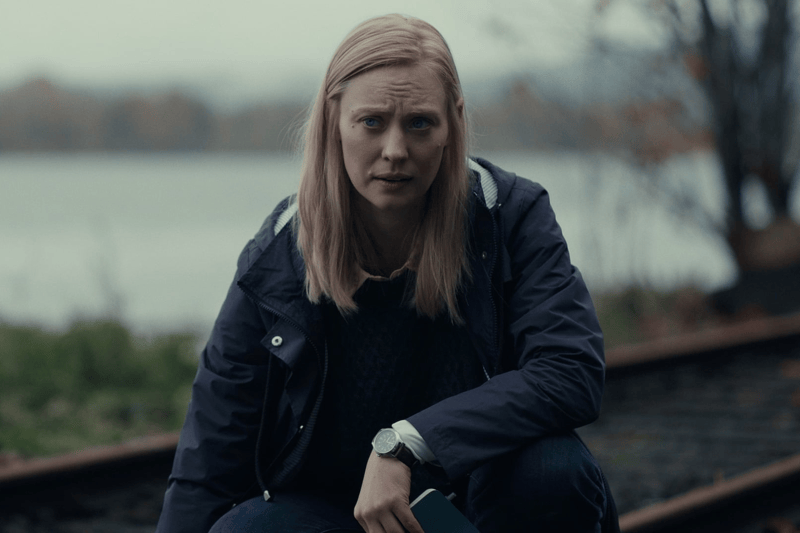
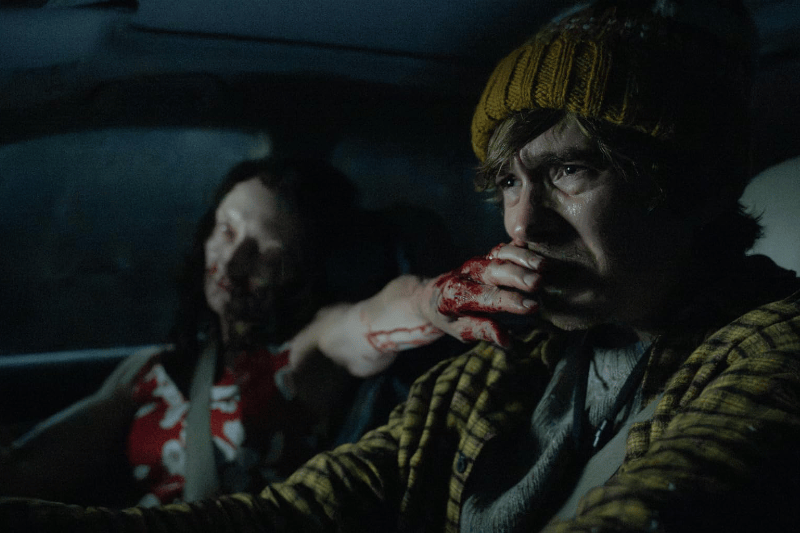
When we last left adolescent Spike (Alfie Williams), he’d ventured far from the confines of his fortified village into the zombie-infested Scottish wilderness, only to come up against a new challenge: a devious cult known as the “Jimmys,” who modeled themselves after famed English DJ, media personality, and sex offender Jimmy Saville. 28 Years Later: The Bone Temple begins with Spike’s violent and unwitting initiation into their ranks, in the echoing confines of an empty swimming pool. After an act of ceremonial bloodshed, he’s bestowed with a matching tracksuit, blonde wig, and the nickname “Jimmy” — much like the half dozen other followers (or “fingers”) of ruthless leader “Sir Lord” Jimmy Crystal (Jack O’Connell).
This gloomy prologue serves as an immediate departure from the group’s zany introduction in the last film. It tells of a world gone mad, one in which Jimmy Crystal’s broken acolytes (most of them teens or young adults) are branded with inverted crucifixes, and told tall tales of children’s TV characters they’ve never experienced firsthand, like the Teletubbies. Between these stories, their Saville-esque garb, and their collective salutes of “How’s that!” whenever Jimmy Crystal barks an order — borrowed from appeals to umpires in cricket, a sport they’ve likely never seen — the movie speaks to notions of lost British popular culture, bastardized and filtered into myth. The Bone Temple may be the fourth entry in a long-running horror franchise, but its closest cousin might just be Anne Washburn’s post-apocalyptic stage comedy Mr. Burns, a Post-Electric Play (soon to be a film by Boots Riley), in which the remnants of American television are transformed into folklore.
This uncanny relationship between past and present is the glue holding the movie’s various plots together. On one hand, we’re made to witness the grisly savagery the Jimmys gleefully enact on other survivors, forcing Alfie and the likes of Jimmy Ink (Erin Kellyman) — a more empathetic cult member, who doubts Jimmy Crystal’s satanic proclamations — to do unthinkable things with pocket knives in the name of survival. This is the way the world is now, and the Jimmys have both accepted it and, in part, refashioned it in their violent image. Nihilistic though it may be, it plays like a brutal rebellion against the failures of older generations, who they believe deserve to suffer. In a disturbing way, it makes perfect sense.
On the other hand, the film also re-introduces us to the loner Dr. Ian Kelson (Ralph Fiennes), whose memorial fortress grants The Bone Temple its title. The perverse and the beautiful collide in a multitude of ways in this subplot, especially as Kelson further investigates the hulking “alpha” zombie he’s nicknamed Samson (Chi Lewis-Parry). Thanks to morphine-tipped darts, the good doctor is able to temporarily tame the enormous beast, and in a way, befriend him, raising questions not only of Samson’s agency, but of whether he has the capacity for memory. This dilemma eventually takes stirring form, but its foundations are laid early on when, for the first time in the series, we’re granted a fleeting window into the zombies’ point of view, entirely recontextualizing our assumptions about them. The story, penned by Alex Garland, may be set in an alternate reality, but its notions of societal collapse, of in-group/out-group mechanics as coping mechanisms, and of the struggle to find beauty in an ugly world, are as contemporary as they come.
The sequel departs stylistically from its predecessor in a number ways, but this also allowed it to feel unique. Where Boyle and cinematographer Anthony Dod Mantle used a series of iPhones to capture both the rush of the sprinting “infected” and the vastness of the highland landscape, DaCosta and her DOP Sean Bobbitt employ a more traditional Arri Alexa 35, but they use its larger frame to create portraits of stark intimacy awash in eerie shadow. Where its predecessor captured adventurous expanse, The Bone Temple appears to unfold within a one mile radius. This makes for an awkward assembly at times — the notions of time passing and space travelled and rendered practically null — but its geographical coincidences also yield some wonderfully weird downtime.
There are moments when the film’s main plot lines are separated only by hundreds of yards, and their lack of interaction is owed to manufactured conveniences. However, these temporary stalemates allow the characters moments of vital, even absurd reflection amidst its treatise on grasping nostalgia in times of uncertainty, allowing them to wrestle between the past as a foreign country, and the future as a world obscured by fog.
Eventually, the story’s notions of ritual and mischief collide in eruptive fashion, affording Fiennes an especially meaningful sequence of full-bodied physical expression. A press screening full of critics breaking into applause happens once in a blue moon, but when the movie brings its dueling nihilism and sentimentality into explosive collision — courtesy of a certain English heavy metal mainstay — the result is catharsis well-earned. DaCosta may not break new stylistic ground the way Boyle has in the past, but her skillful balance between the extremes of misery and euphoria makes for a rapturous studio oddity. [4/5]