
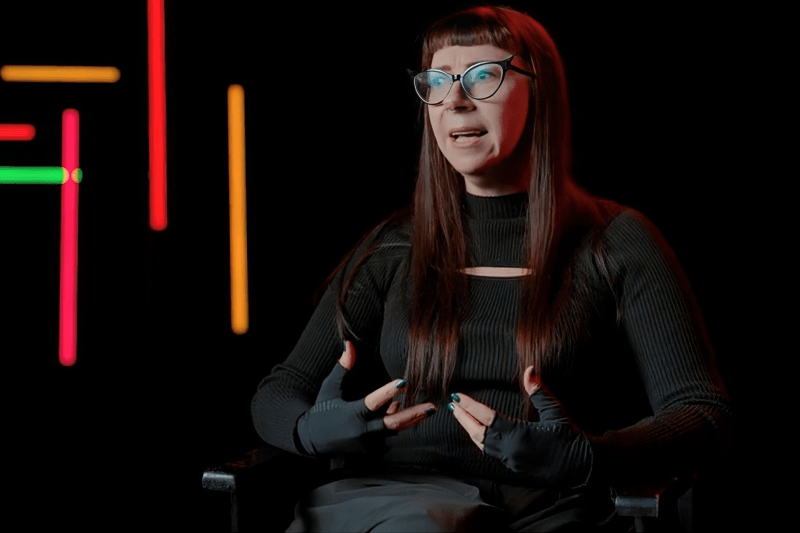


With Amy Madigan and Autumn Durald Arkapaw being recognized by the Academy of Motion Picture Arts and Sciences for their work in the horror genre, it may be tempting to frame this as some kind of turning point for women in horror. So it is wonderful timing that we have a new documentary to remind us of women’s success throughout the history of the genre. 1000 Women in Horror, a new film from Donna Davies, gathers together an impressive array of female filmmakers to discuss the history of women's impact on the genre.
Adapted (or perhaps inspired) from writer Alexandra Heller-Nicholas’s book of the same name, 1000 Women in Horror is rooted in horror scholarship. From stories about the first time a filmmaker saw a final girl onscreen, to reflections on their own experiences in a male-dominated industry, Davies’s documentary takes a holistic approach to the place of women in horror films – as creators, as heroines, and as victims, offscreen and on. Anchored in the talking points provided by Heller-Nicholas herself, the film bounces between horror classics new and old to paint an inspiring picture of why women have always been at the heart of the genre.
And while some documentaries may have chosen to tackle this topic in something resembling chronological order, 1000 Women in Horror takes a more novel approach to its structure. Instead of moving linearly through film history, the documentary is broken into a handful of segments meant to map to the experiences most women have in society. These include segments on childhood and adolescence, with guests describing how those concepts in landmark horror films have mapped to their own real-world experiences.
In one of the earlier scenes, for example, Akela Cooper (screenwriter of M3GAN) and Brea Grant (writer-director of 12 Hour Shift) share stories of how their own girlhood was shaped by the presence of dolls, a frequently cursed item in horror. For Cooper, it was the inevitable connection between My Buddy and Child’s Play. Grant, meanwhile, opted to throw her doll down the stairs as an act of childhood protest.
This is a welcome refresh to the documentary structure, though not one without its peaks and valleys. Because there is no throughline in each segment, the film does have a tendency to jump around a bit, darting between historical and contemporary examples in service of whatever film reference comes next. This also means that the segments most aligned to the current experiences of our talking heads – such as motherhood or aging – hit the hardest, giving 1000 Women in Horror the (much-preferred) trajectory of getting more engaging as it goes along.
To that point, one of the true highlights of the film is Kate Siegel’s description of her first pregnancy, which blurs the line between a personal anecdote and a short-form horror story. Davies also intercuts this story with footage from Ridley Scott’s Prometheus where Noomi Rapace undergoes an emergency c-section to remove an alien parasite. There are plenty of scenes where 1000 Women in Horror nicely marries description with clips, but this is the only segment that ended with me involuntarily clapping my hands together.
But whatever tradeoffs comes with this structure are more than offset by the film’s modernization of film canon. Yes, the documentary highlights usual suspects such as The Exorcist or Rosemary’s Baby, but the real focus of 1000 Women in Horror is the contemporary film canon. Heller-Nicholas and Davies dedicate real screen time to modern films like Sophia Takal’s Black Christmas or Natalie Erika James’s Relic. These are horror movies that have earned critical acclaim, but seeing them featured in this film solidifies their place in a 21st Century canon of feminist cinema.
And that’s what makes 1000 Women in Horror such a notable work. Hopefully, the idea that women are the lifeblood of the horror genre should not come as a surprise to Shudder subscribers, but this documentary reminds us that film canons are living and breathing artifacts that are structured by intent. To paraphrase Thomas Jefferson, the tree of horror history must be refreshed from time to time with the blood of film scholars, and documentaries like 1000 Women in Horror do a wonderful job of interrogating the old guard while carving out space for the next generation of horror greats.
If you’re a horror fan, you probably won’t need much encouragement to watch a film where you can hear people like Cooper or Mary Harron talk about their relationship to the horror genre. But for those curious about the history of the genre, 1000 Women in Horror is a wonderful primer to the successes of women on both sides of the camera. Between this, Queer for Fear, and Horror Noire: A History of Black Horror, Shudder continues its thoughtful approach to capturing the history of the genre. These works may not be definitive – no film, however ambitious, could cover women’s contribution to horror in a mere 96 minutes – but it sure as hell points us in the right direction. [3.5/5]