


If you’re going to make a movie about a character returning to a once-beloved but unrecognizable location, you also might want to make sure that doesn’t accurately describe the finished product. It’s been almost 20 years since the release of Christophe Gans’s Silent Hill adaptation – and probably even longer since the last time I played Silent Hill 2, the game being brought to the screen in Return To Silent Hill. That might just make me the ideal audience for this new film, which also serves as a kind of “broad strokes” adaptation of the second game – for both better and worse.
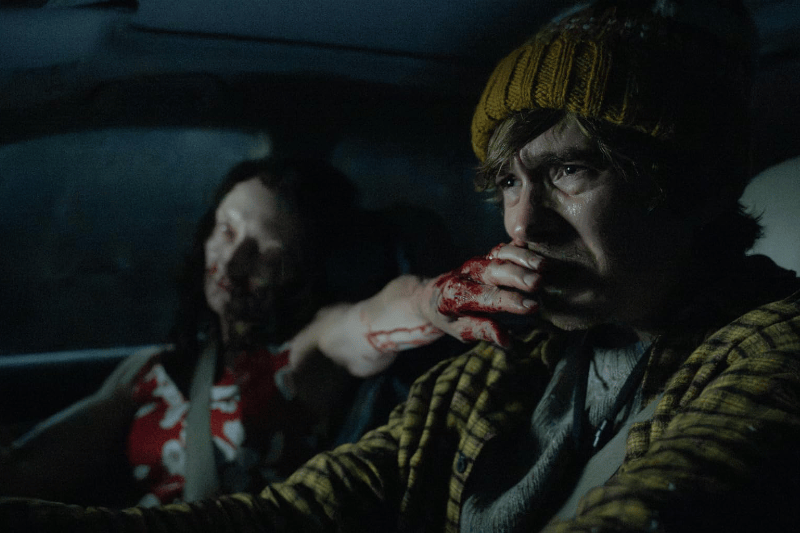
James Sunderland (Jeremy Irvine) is not OK. Months after ending a whirlwind romance with Mary (Hannah Emily Anderson), James finds himself back in the big city, lost in a bottle and fixating on Mary’s face in each of his new paintings. So when he receives a letter from Mary begging him to come back to the town of Silent Hill – Mary’s hometown, where they met and fell in love – James throws caution to the wind and makes the drive to the coast.
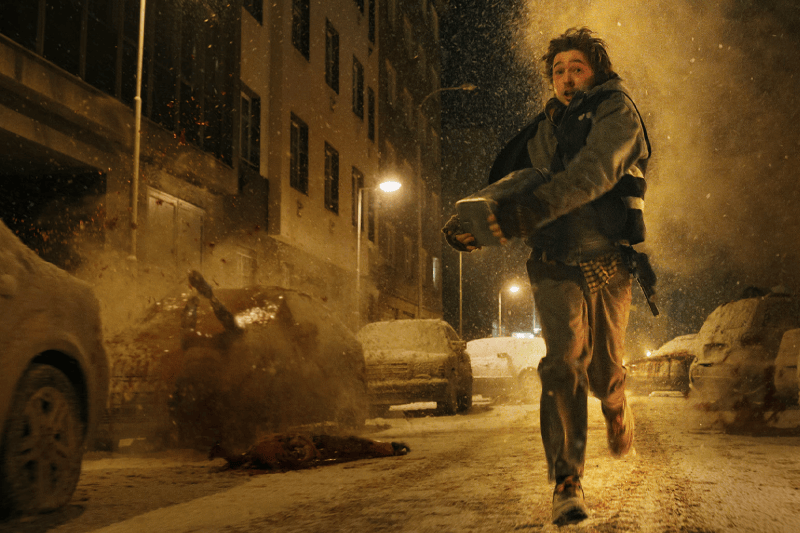
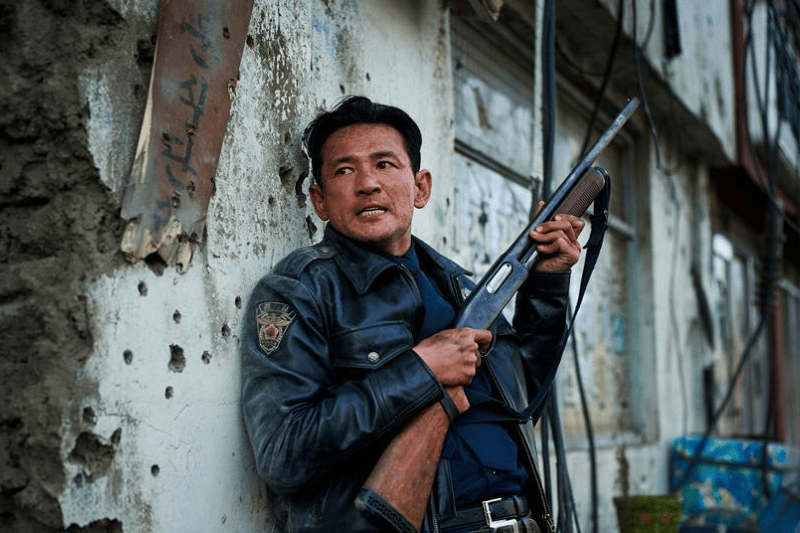
Only Silent Hill isn’t as he remembered. The city has been overcome by fires and floods, and what few residents he meets warn him that the once-pictureesque streets are now overrun by inhuman creatures. And the further James travels into the heart of the city, the more perverse the city becomes, twisting into a nightmarish hellscape seemingly of his own making. But the real terror – the true nightmare hiding in the fog – is what James begins to remember as he closes in on Mary’s last known location. Because what happened to Silent Hill might have more to do with James’s treatment of Mary than he’s allowed himself to remember.
The baseline for any Silent Hill adaptation is how well it captures the physical perversion of the city. Here it’s fair to say that Gans is two-for-two in the Silent Hill universe. As James picks his way through the main streets and alleys, we are treated to both the ash-covered landscape of the primary world as well as the industrialized hellscape teased out of James’s mind. And while a good chunk of the film seems to be recreated digitally onscreen, there is also an abundance of the practical – the inside of rotting hotel rooms, the ash-covered tabletops of an abandoned hotel. There’s a sense of permanence to Silent Hill that grounds the action sequences, and there are long chunks of Return to Silent Hill that are delightfully immersive.
But the film’s greatest strength – the obvious care put into its production design – is also what holds it back. Gans and company are too focused on recreating iconic moments from the video game; what these scenes actually represent for James lives entirely off the page, relying on your knowledge of the video game to fill in the blanks between scenes. Silent Hill 2 is an immersive experience, once that slowly builds connections between James and the city over time, but speedrunning through these big moments in the film causes the film to get a bit lost between mediums.
One might even describe Return To Silent Hill as the uncanny valley of video game adaptations, a feature that hews too close to its gameplay elements to build the narrative needed in a standalone feature. With all apologies to the late Roger Ebert, video games are unquestionably art, but art that puts a premium on interactive storytelling. Return To Silent Hill gets a lot right about the game’s set pieces – the industrialized cityscape, the inhuman creatures – but fails to build any narrative momentum around these bits. It’s less storytelling and more a Silent Hill theme park ride, one that highlights standout moments from the game for curious audiences.
Much like the games, your emotional connection with the main character – the symbiosis we’re meant to form with James Sutherland during his descent in the darkness of Silent Hill – will be the deciding factor. Unfortunately, the cast is not strong enough to bridge the gap between the film and the game. Irvine might be a decent actor in another setting, but here he feels trapped in a kind of Hot Topic-flavored depression, scowling and wincing in a way that leaves the audience very little interiority (despite the film’s on-again, off-again attempt at voiceover). Anderson is better in multiple roles, but since her characters exist as an extension of James’s guilt, the emotional impact of each fails to land.
Return To Silent Hill has plenty of obvious flaws, and the threadbare pieces of its production will make for obvious fodder for many. At this point, it’s probably fair to say that any film that jumps into sequences of first-person filmmaking is not destined for cinematic greatness. But there is a spark of the divine in the production, an inventiveness in bringing the city of Silent Hill alive on the screen that makes it impossible to rule out altogether. We may still be waiting for the first truly great Silent Hill adaptation, but the franchise continues to look unlike anything else in horror today. That’s still worth something in my book. [2.5/5]