

It’s been three short years since the release of Lee Cronin’s Evil Dead Rise, and the Evil Dead franchise seems ready to take its turn back in the spotlight. Evil Dead Burn, the new release from French filmmaker Sébastien Vaniček, has traded in its April release date for a prime July slot, and the opening weekend buzz – no doubt to the delight of the Warner Bros. media department – celebrated (“celebrated”) this one as the franchise’s meanest film yet. But for all its franchise aspirations and promises of extreme horror, the biggest surprise of Evil Dead Burn is how faithfully it executes the marching orders of the relaunched series. Evil Dead Burn is a pure horror film with an ambitious eye, and those able to set aside the slapstick stylings of Sam Raimi may find it to be a great example of what these movies are getting right.
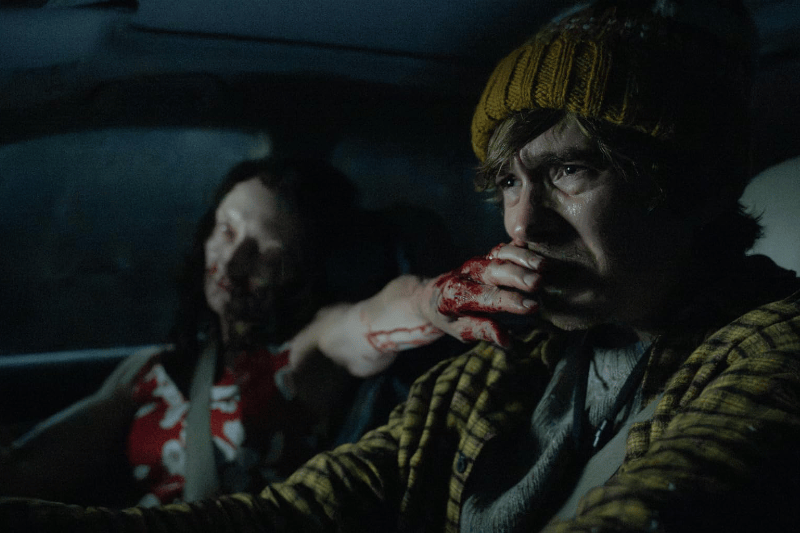
After the death of her abusive husband William (George Pullar), Alice Price (Souheila Yacoub) reluctantly attends the family’s wake in their childhood home. Alice is not quite sure how she feels about her loss, but she knows that William’s mother Susan (Tandi Wright) holds her responsible for the death of her son, and that Susan’s husband Edgar (Erroll Shand) will continue to be emotionally absent in the family’s biggest moments. But with some support from her brother-in-law Joseph (Hunter Doohan) and Joseph’s girlfriend Thya (Luciane Buchanan), Alice decides to show up for the family one last time before striking out on her own.
Stay in touch
Sign up for our free newsletter
But the Price family is no average family. Their grandfather’s obsessive research into the occult – at the neglect of his wife Polly (Maude Davey) – left the family fragmented, and Joseph’s budding obsession with his grandfather's research only heightens the family's tension. So when an ancient evil decides to tag along for the wake, the Price family soon finds their unspoken conflicts bubbling over into undead mayhem. If Alice hopes to survive the night, she must first locate a blade of immense power buried somewhere deep within the family's (non-metaphorical) baggage.
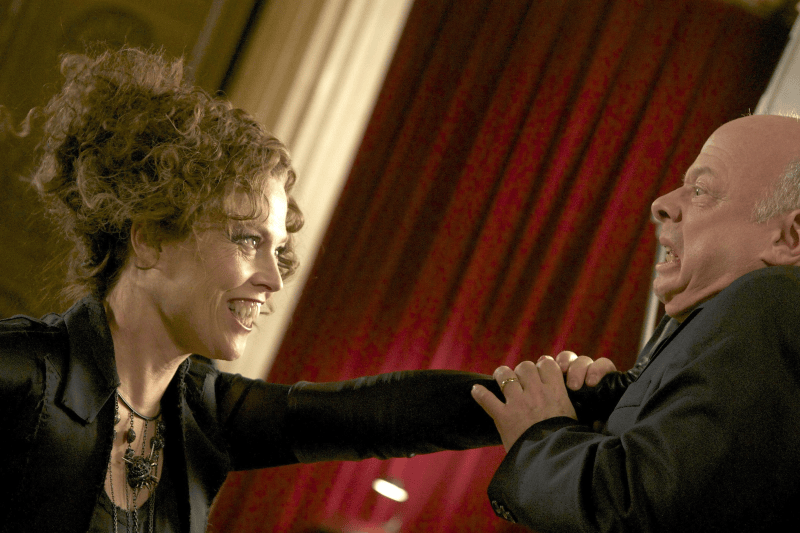
We are now two films into Hollywood’s attempt to turn Evil Dead into a modern horror franchise, which means we have a real sense of how things are supposed to work for these movies. Like Cronin before him, Vaniček has seemingly been given free reign with only a few loose guardrails in place. Like Evil Dead Rise, Evil Dead Burn unfolds within a single location, following the world’s worst family as they come together to mourn the loss of their oldest son. It’s a fair deconstruction of the original two Evil Dead films, which effectively served as an exercise in one setting and varied set pieces. Like all good directors, Vaniček colors within the lines beautifully, finding a variety of ways to turn the Price family home into a charnel house.
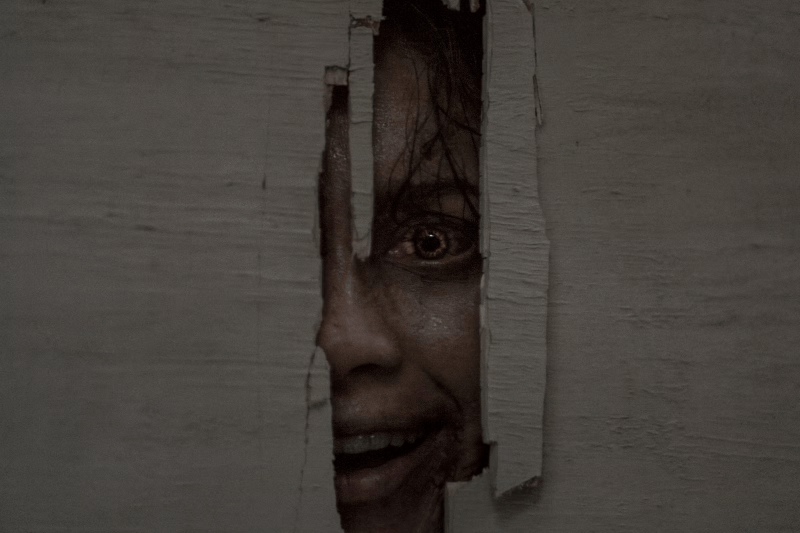
Take the bathtub scene. In the film’s final act, Alice hides from the deadites in the second floor bathroom, only to have one of the family members drag her out of the bathtub, up the wall, and onto the ceiling, where she is slowly strangled while being hung upside down. It’s a stunning shot; the action unfolds in a single take, and the camera rotates quickly from a close-up on the creature to reveal Alice’s dangling form. In a film with fewer ideas, it’s the kind of stunt that would be at the forefront of the marketing campaign, but it barely causes Evil Dead Burn to break a sweat.
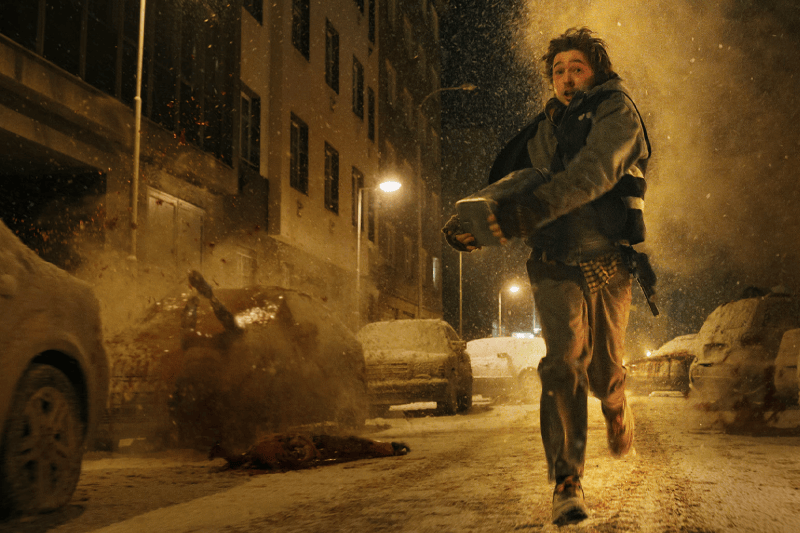
By keeping the set pieces – and the bodily damage – varied, Evil Dead Burn keeps things moving at a brisk pace, rarely repeating itself. The film operates under an action economy that most A-list directors wish they could achieve, and its kinetic storytelling quickly becomes the only throughline that matters for the film. In fact, the few times that Evil Dead Burn does slow down to offer tidbits of family history or Evil Dead lore, the narrative quickly grinds to a halt. Vaniček’s biggest struggle in Infested, his debut creature feature, was his inability to balance dynamic action sequences with character stakes that matter, but here he trusts his actors to get the job done with just a few broad strokes. It’s the perfect marriage of franchise and approach.
Evil Dead Burn is also the first film in the franchise to play with something akin to consequences. The Price family would be doomed even without the Necronomicon. Hurt people hurt people, as the saying goes, and everyone (with the possible exception of Alice) is punishing those around them with some extension of their childhood abuse. But rather than present this as a highbrow variation on the Evil Dead template, Evil Dead Burn uses this as a way to justify the horribleness of the characters. This is a film where some characters choose to become deadites, and the film’s quiet condemnation of the Price family – thin though it may be – gives the film a little extra juice when it comes to its abuses.
All this talk of violence also begs the question as to how the movie balances horror and humor. In the words of my buddy Noel Bartocci, Evil Dead Burn may be a mean movie, but it’s not a cruel one. Reports of its ties to New French Extremity have been greatly overrated; the true connective tissue between the films of Vaniček and Cronin are their overt enthusiasm for what they’re allowed to get away with onscreen. Whatever extremism exists in Evil Dead Burn is offered up in service of the audience, not (just) in cruelty towards its characters, and that allows the movie to occupy the same genre space as Sam Raimi’s original feature. Vaniček’s movie is not a horror-comedy, but it still finds some undeniable humor in watching the worst family ever become possessed.
Evil Dead Burn may lack some of the gleeful grotesqueries of Evil Dead Rise, but Vaniček and company continue to prove that rejecting the overt horror-comendy conventions of the early Evil Dead movies was the franchise’s smartest move yet. Ghost House Pictures has now accomplished what so many studios have tried and failed to do: create a franchise where each film is a sandbox for a rising star of the horror genre, allowing them to indulge their most ambitious ideas with only a few narrative conditions to fulfill. Here’s hoping that Evil Dead Wrath, the next film in the series, only continues the new trilogy’s sterling track record. [4/5]