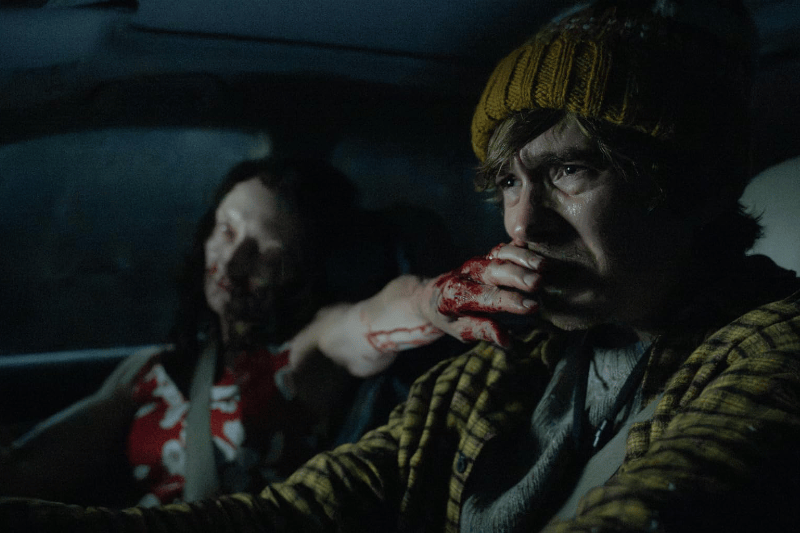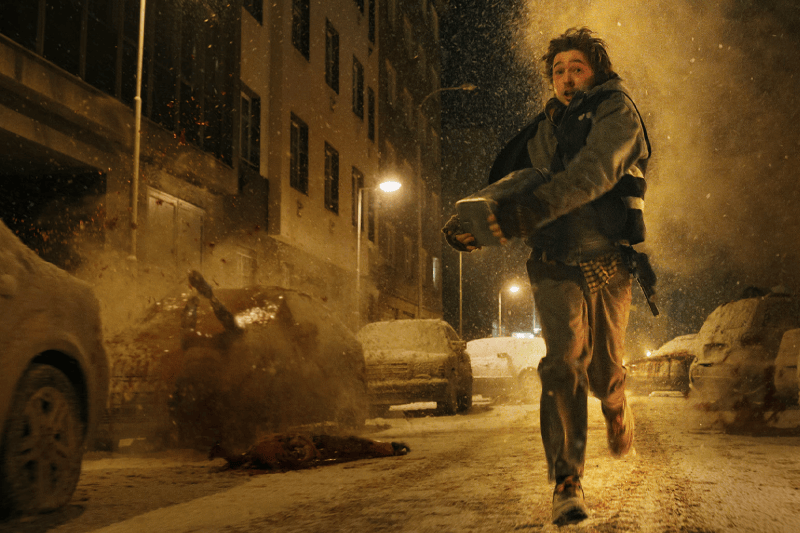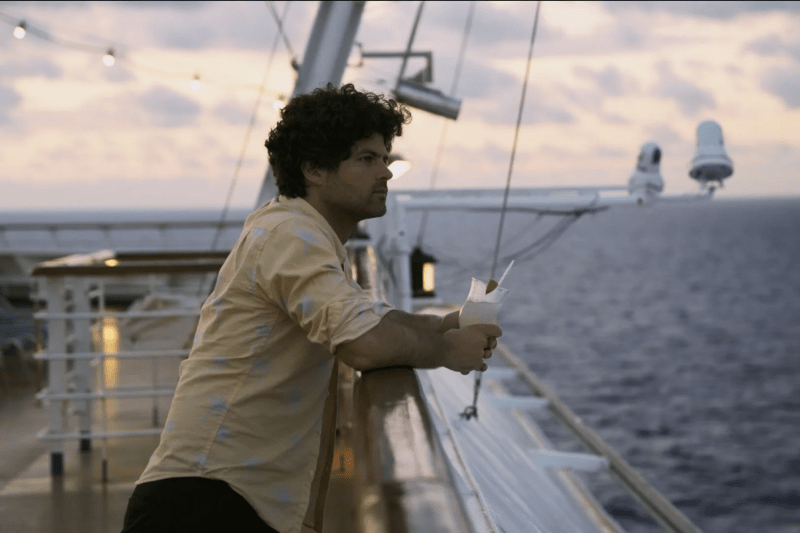



Daniel Goldhaber and Isa Mazzei’s 2018 camgirl masterpiece Cam is an eerie and thought-provoking look at sex work. Set in the world of “camming,” or performing on webcam for an audience, Cam represents the job and its challenges with a grace and care not often seen in media. Upon its release, that care — that unflinchingly compassionate peek behind the curtain — was one of the film’s most compelling selling points. But with the undeniable rise in AI deepfakes, Cam’s tale of a stolen identity has managed to become even more poignant.
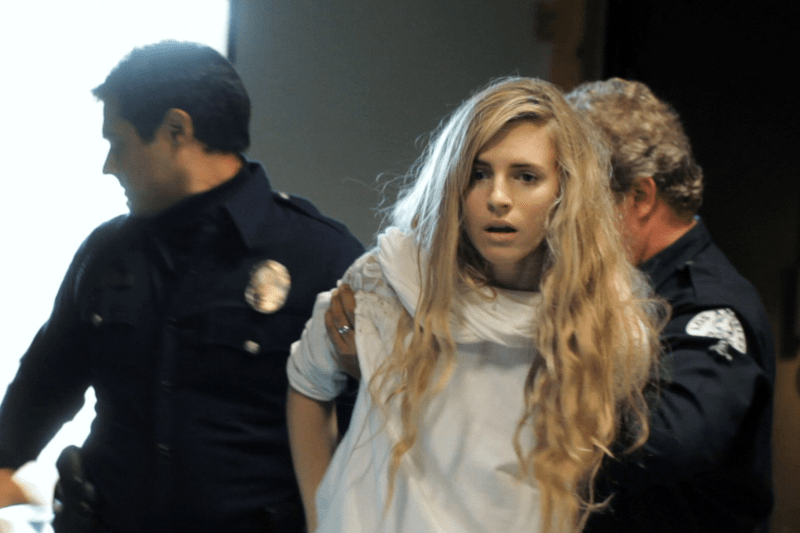
Cam follows wildly ambitious camgirl Alice (Madeline Brewer), who performs as Lola, as she pulls out all the stops to increase her ranking on cam site FreeGirlsLive. She’s got themed shows, wild gimmicks, and a calendar where she tracks her progress. Alice takes her job seriously, carefully presenting a polished and perfectly crafted persona to her audience.
Alice is single-mindedly fixated on her success, which directly translates to gaining popularity and rising up the FGL leaderboard. It’s her only tangible metric and it consumes her. In fact, at times she appears less self-conscious about the nature of her actual job and more so the fact that she’s not doing better at it, deciding to hide the sex work from her mother until she’s more successful.
For whatever reason, Alice believes that conquering the site’s leaderboard will prove something. To everyone. Including herself.
But Alice lives a precarious life of deliberate separation. When camming, her rules and boundaries are strict. In addition to refusing to fake orgasms and tell “her guys” she loves them, she only films in her designated room. Privacy and comfort are things she rightfully prioritizes, but they also stand in direct opposition to her ambition. Once she finally manages to reach a higher leaderboard ranking, she struggles to maintain it. The hustle is never-ending, and the threat of being dethroned ever-present, so she decides to cross a teeny tiny boundary and head to the bustling camgirl house for an extreme show – something she explicitly didn’t want to do. But in order to achieve the success she’s looking for, she feels she has no choice. It’s the first time we see Alice betray herself, and it’s the incident that leads to her identity being stolen.
Cam is pretty coy about what’s happening to Alice, at least at first. The morning after her big show, where she successfully breaks into the top 50, Alice wakes to find she’s been locked out of her FGL account. It’s an annoyingly relatable experience, heightened because it’s directly tied to Alice’s livelihood — it’s her job. Stranger than the random lock-out is the fact that the account is still streaming live. And the streamer looks just like Alice. Alice assumes it’s a glitch — how else would Lola be live when Alice is on the phone with tech support?
Alice doesn’t know, and FGL’s customer support is, unsurprisingly, no help. Locked out of her account and without platform resources, Alice starts making assumptions. Perhaps one of the other girls hacked her. Or a look-a-like hijacked her account. But since the live shows are still happening inside Alice’s house, none of those possibilities really makes sense.
Alice becomes fixated on Fake Lola, watching her streams and even tipping to prompt the image on screen to respond — which she does, in real time. Frustratingly, as Fake Lola continues to parade around with Alice’s face, she keeps moving up that leaderboard. Fake Lola is more successful than the real thing. Which is in no small part due to Fake Lola repeatedly breaking the rules Lola put in place.
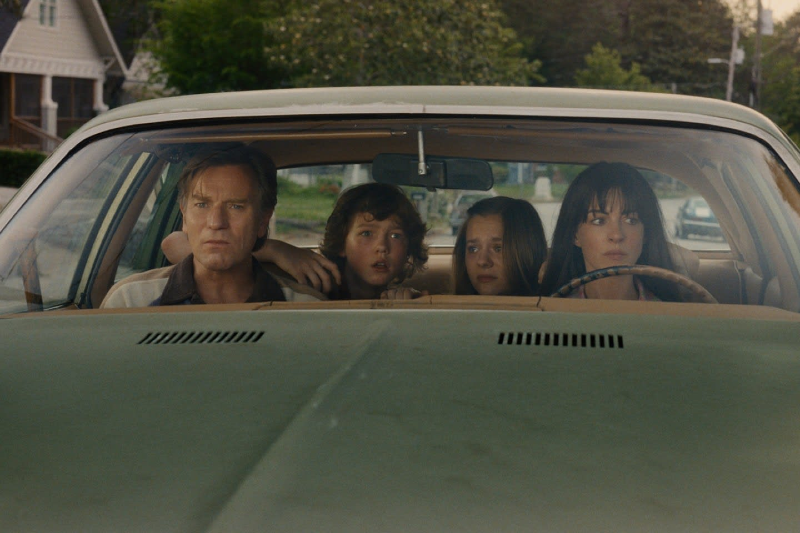
To Alice’s horror, Fake Lola begins streaming in public places. She professes her love to the men in her room, her platitudes generic and uninspired. At one point, the fake stomps through Alice’s house, filming her private spaces — her bedroom — pictures of her younger brother. Fake Lola is cavalier in a way that Alice was never foolish enough to be. The copy not only takes her job, it also takes her safety. Her autonomy. Because no matter Alice’s current involvement, it’s her face and her reputation. The world sees her as the perpetrator of these acts.
One of the guys from her room, “Tinker” (Patch Darragh), is the only person with any clue what’s going on. And even then, he’s just kind of guessing. He asserts that, “it takes anything it can find of you online,” and, “it’s on all the cam sites.” Which seems true as Alice herself is able to identify a handful of other women on FGL who’ve been replaced. He calls the anomaly “it,” claiming he can “usually tell when a girl’s going to be copied.” But none of that seems to matter to Tinker as right after his admission, Alice finds him hiding in the bathroom masturbating with the fake Lola.
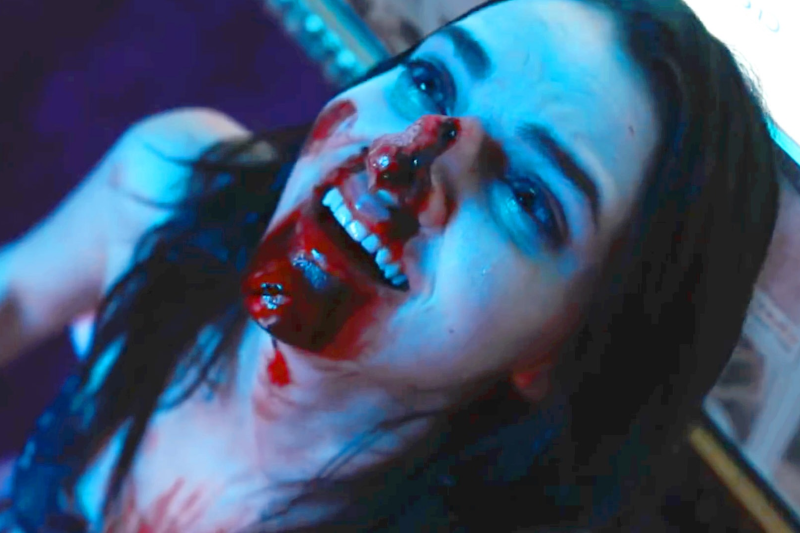
It’s then that Alice first comes face to face with the copy of herself, and it’s then she realizes the copy has no idea what she — or it — looks like. It has no sense of self and thus can’t discern something as abstract as identity. It has no real logic or sentience; it truly is an “it.” The realization is game-changing, and Alice uses the newfound info to trick fake Lola into giving back the stolen account, which Alice promptly deletes.
Cam is a tale of duality and compartmentalization — the fragility of unchecked ambition. And it’s obviously a deeply empathetic look at sex work. But it’s also about the terror of a stolen identity. Alice unwittingly trains the copy of herself by doing months of shows before it takes her job. She watches as the thing with her face regurgitates the same tired small talk as the other camgirls it copies, essentially stripping away everything that made Lola unique. The men around her either can’t tell she’s been copied, or don’t care.
It’s not too surprising that a film so unabashedly pro-sex work would also be early to the “machines are stealing our jobs” party. Sex workers have long been the canaries in the coal mine when it comes to labor rights and general autonomy. And even now, as the machines are actively taking our jobs, women and girls are still being uniquely violated by this emerging tech. Through this lens, it’s easy to view Alice’s story less as a niche exploration of a complex industry, and more of a rallying cry for all us humans trying to keep the dead-eyed copies at bay. Hopefully the rest of us notice what’s happening before we’re locked out of our own lives.
You can watch Cam online for free by visiting director Daniel Goldhaber's website here.